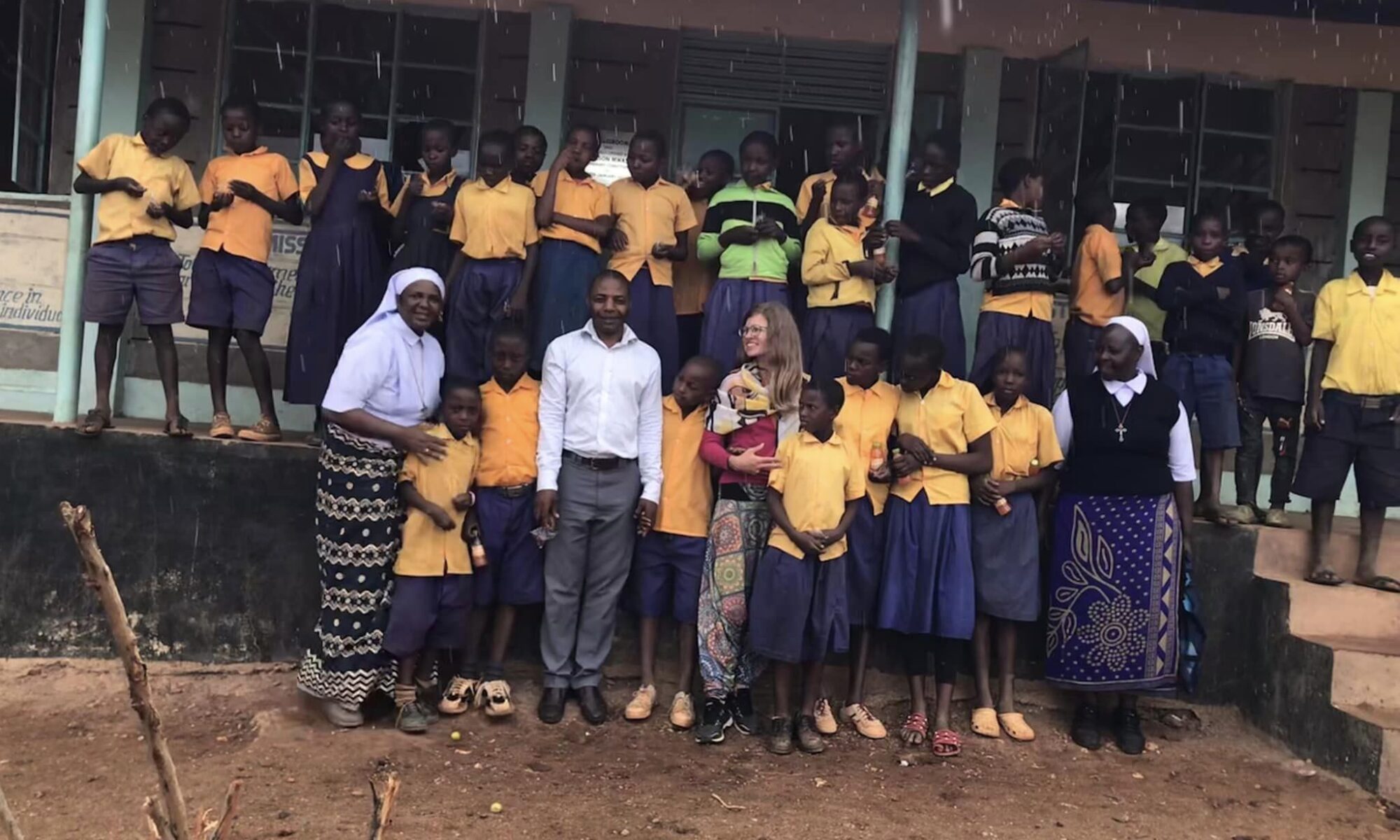

Access to quality education in Uganda remains a challenge, particularly in rural areas where infrastructure gaps and limited public resources hinder learning outcomes. According to the Uganda Bureau of Statistics (UBOS) and the Ministry of Education and Sports (MoES), Over 35% of primary schools in Uganda lack access to electricity with Kamuli District among the worst affected (only ~15% rural schools electrified). At Good Shepherd Community School, 529 learners (312 girls, 217 boys) rely on makeshift infrastructure without electricity or piped water. This
severely limits study time, ICT integration, and safety for boarding girls.
EWB East Africa (EWB EA) and the University of Wisconsin, an EWB-USA chapter, have supported phased permanent classroom construction since 2024. Despite progress, energy poverty and water insecurity remain core barriers to learning outcomes and equity.
OVERVIEW
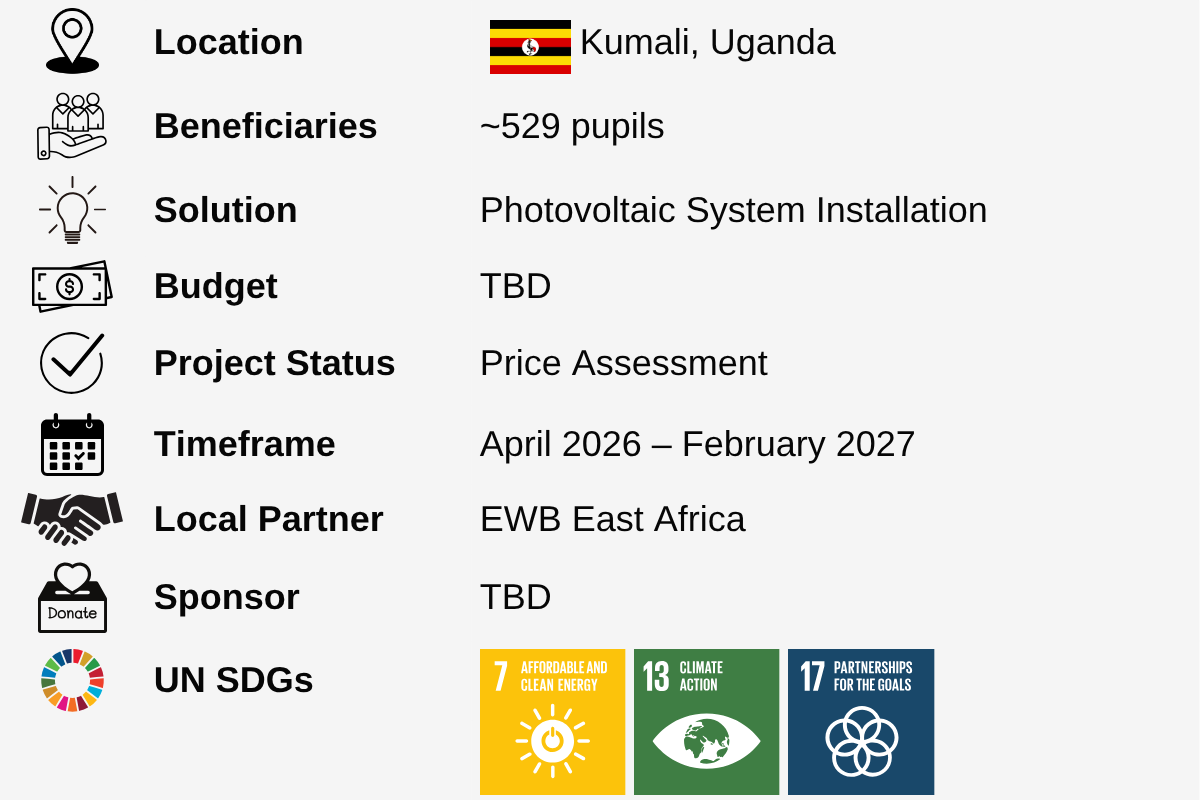
Local Issue & Impact
- Lack of electricity limits evening study, teacher preparation, and ICT use.
- Absence of safe lighting in dormitories and latrines exposes girls to harassment risks.
In 2023, the University of Wisconsin-Madison Chapter and
Engineers Without Borders East Africa (EWB-EA) together
began supporting the phased construction of permanent,
dignified classroom infrastructure. To date:
▪ A 4-classroom block was completed in 2024
▪ A second 4-classroom block is under construction with
EWB support and will be completed by January 2026
▪ A girls’ dormitory, office, and basic latrines have also been established through local and partner efforts
Proposed Solution: Solar Electrification for Educational and Community Empowerment
To empower Good Shepherd Community School through solar energy solutions that expand learning hours, enable digital education, improve safety.
Objectives
- Provide reliable solar PV systems for classrooms, dormitory, office, and latrines.
- Build digital readiness by powering ICT tools, enabling connectivity, and training staff and community skilling centre.
It is expected that there will be
- +2 hours evening study per night; >50 ICT hours/month.
- 90% night-time latrine access with lighting; 0 reported incidents of night fear and potential harassment.
- Digital Readiness: At least 4 laptops/routers operational, teachers trained in ICT-enabled lesson delivery.
EWB EA will quality assurance through provision and alignment
with government guidelines, coordination, preventive maintenance (2x annually), and partial project supervision costs.
The Good Shepherd Community School & GSCDA will contribute local labour, land allocation, and O&M costs and overall sustainability of the project. The community will ensure caretaker training, routine maintenance, and cost-sharing for replacements (e.g., batteries, bulbs).