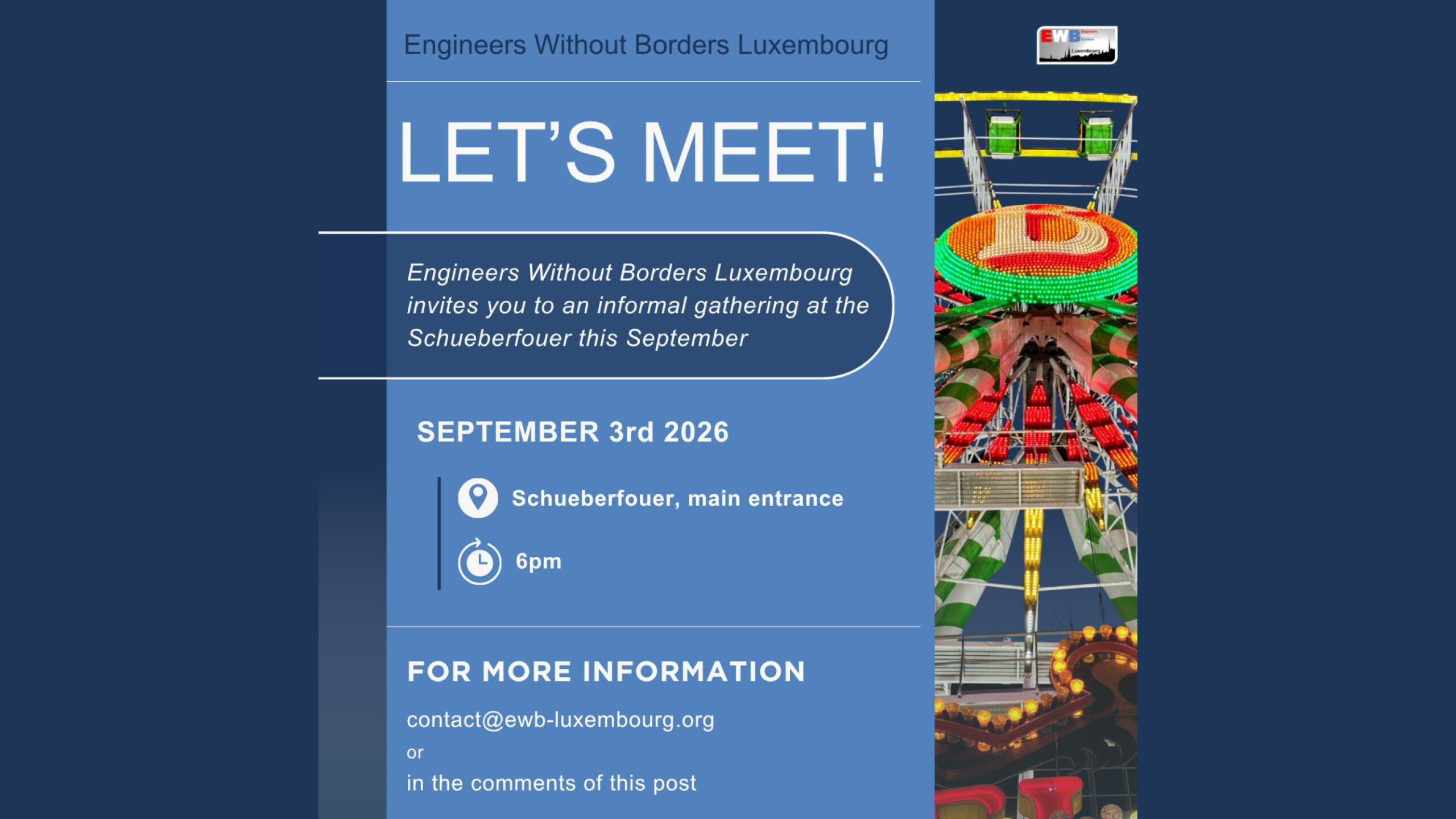
Let’s take a break from meetings and project work and meet up at the Schueberfouer! 🍻
We’re looking forward to seeing old faces, new faces, and everyone in between! Let’s catch up, exchange ideas, and maybe talk about some old, new, and future projects along the way.
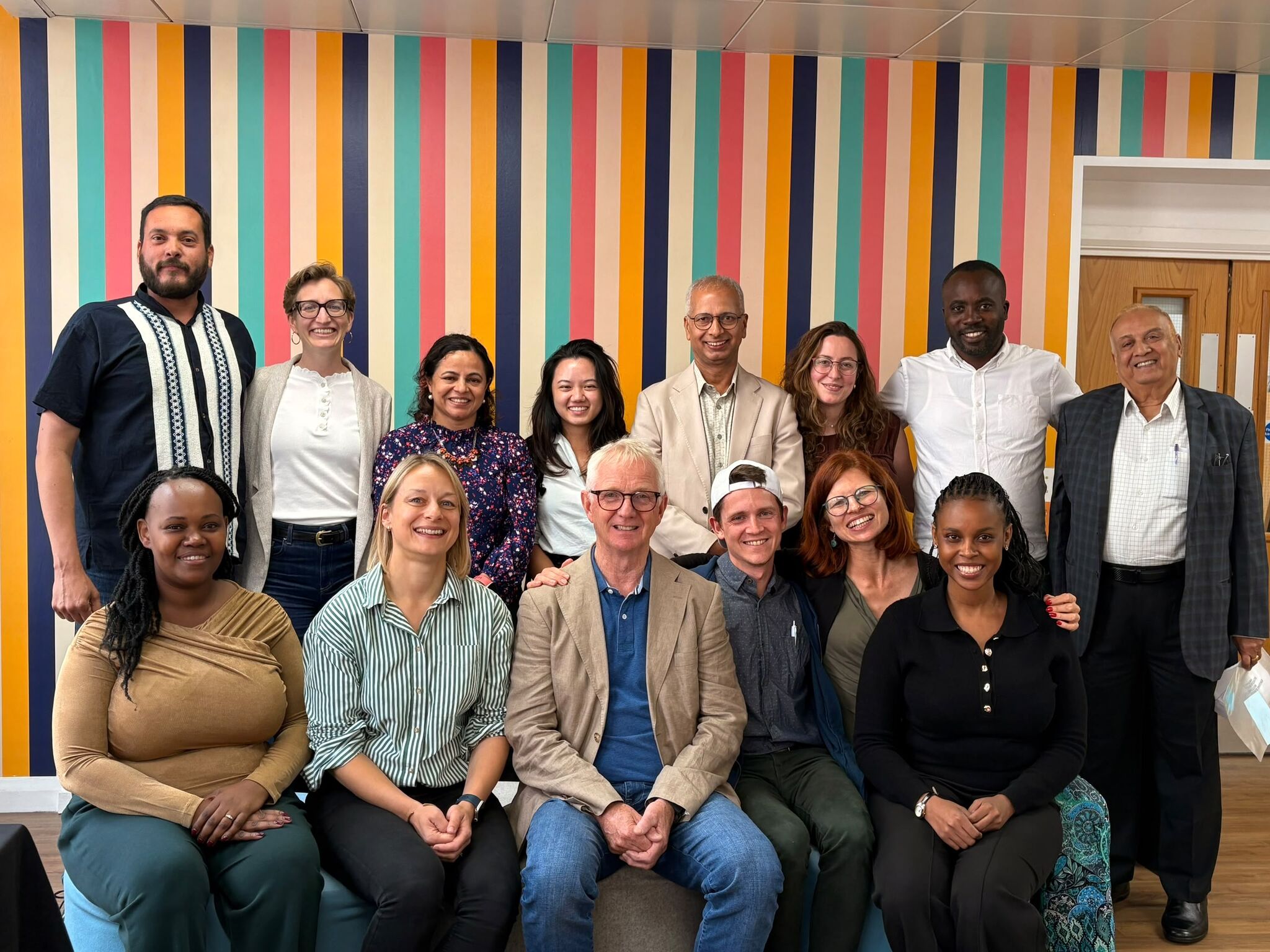
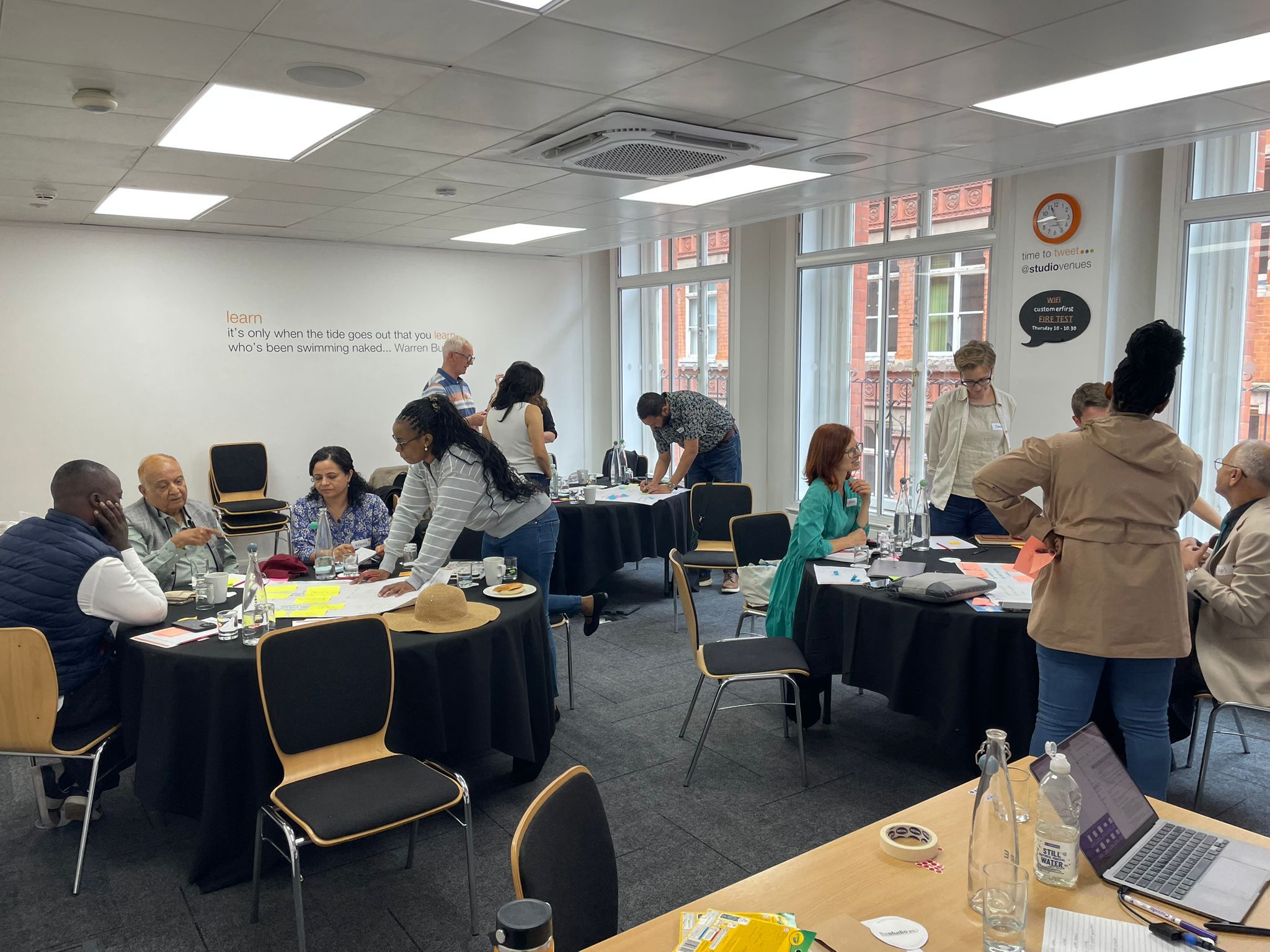
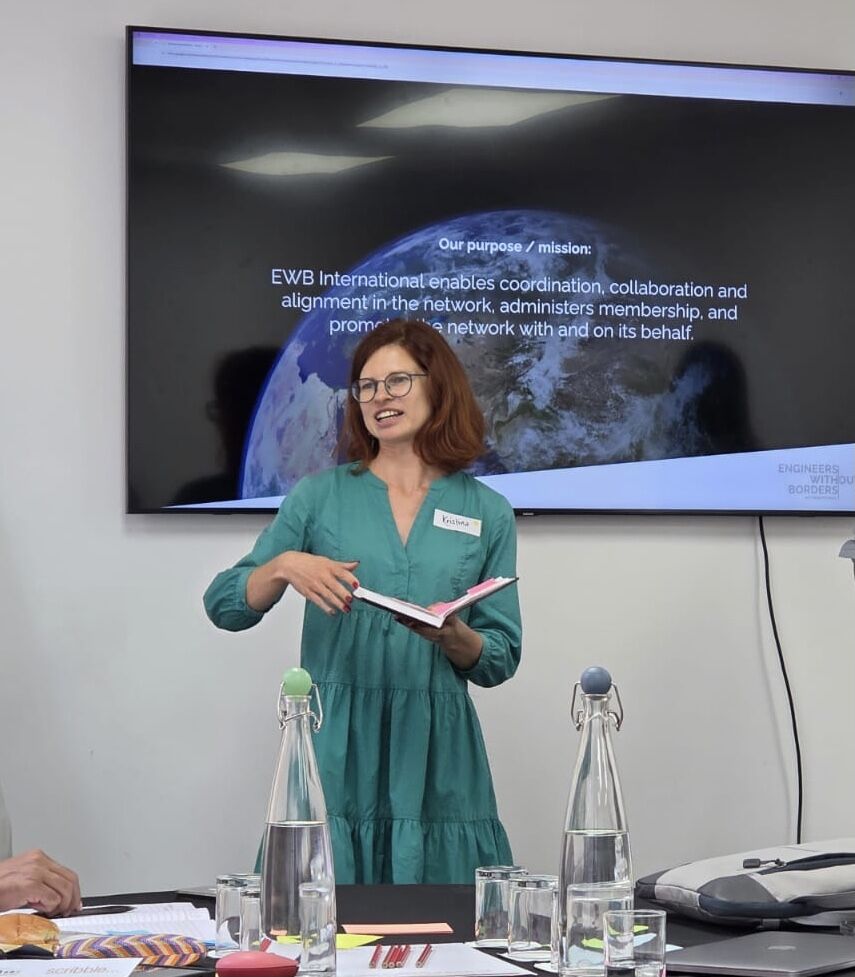
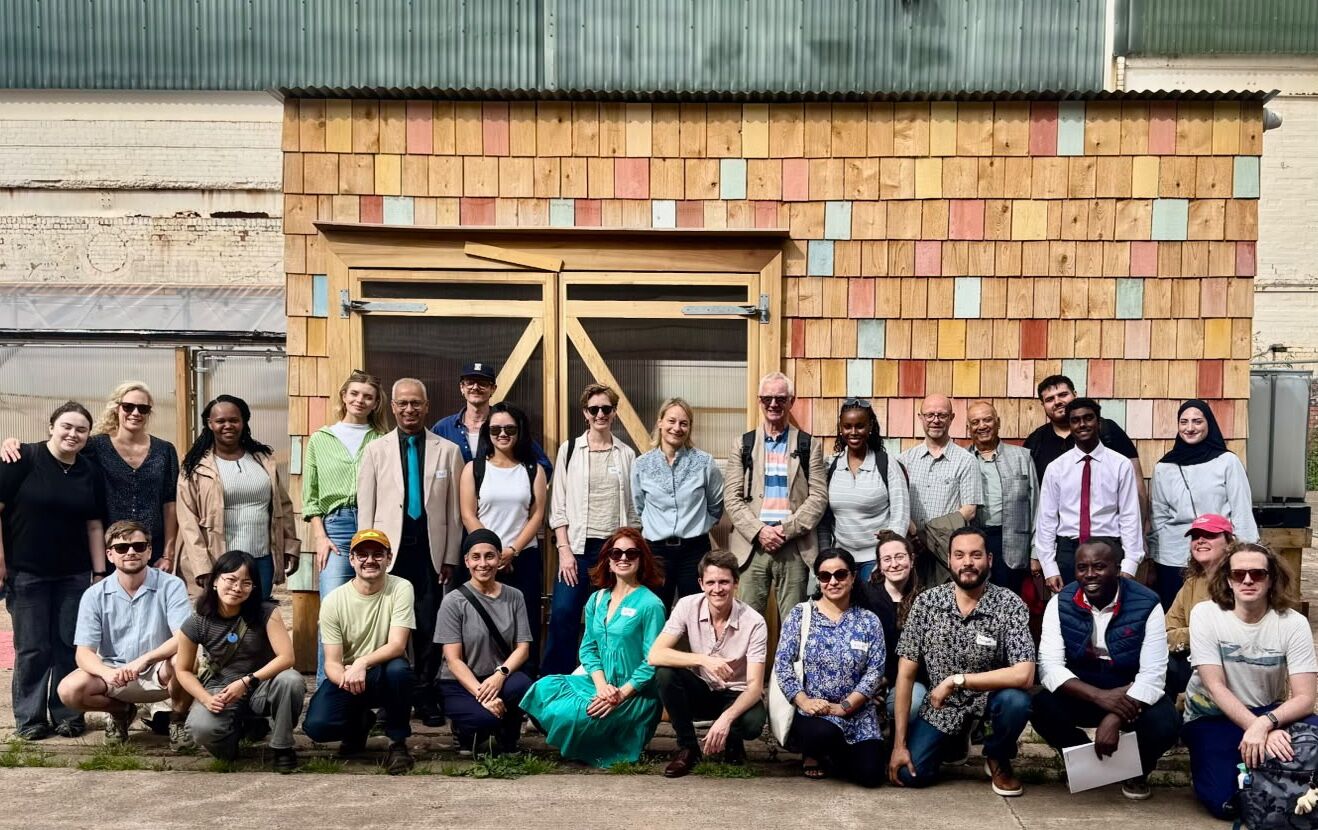
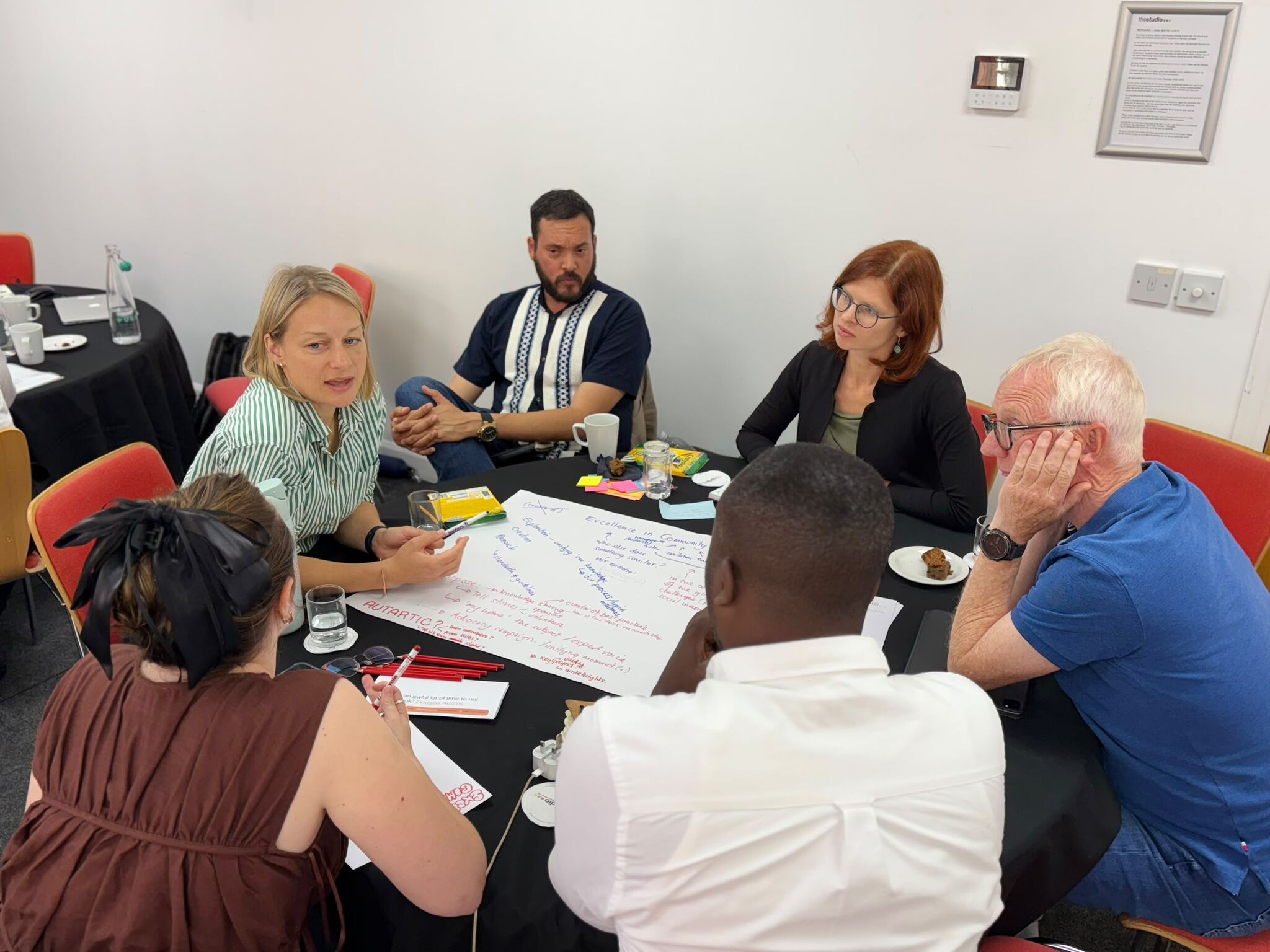
Over three inspiring days, EWB-I board members and the delivery team worked together to shape the network’s vision toward 2030—strengthening the strategy, governance, and collaboration to amplify global impact through engineering for sustainable, community-centred development.
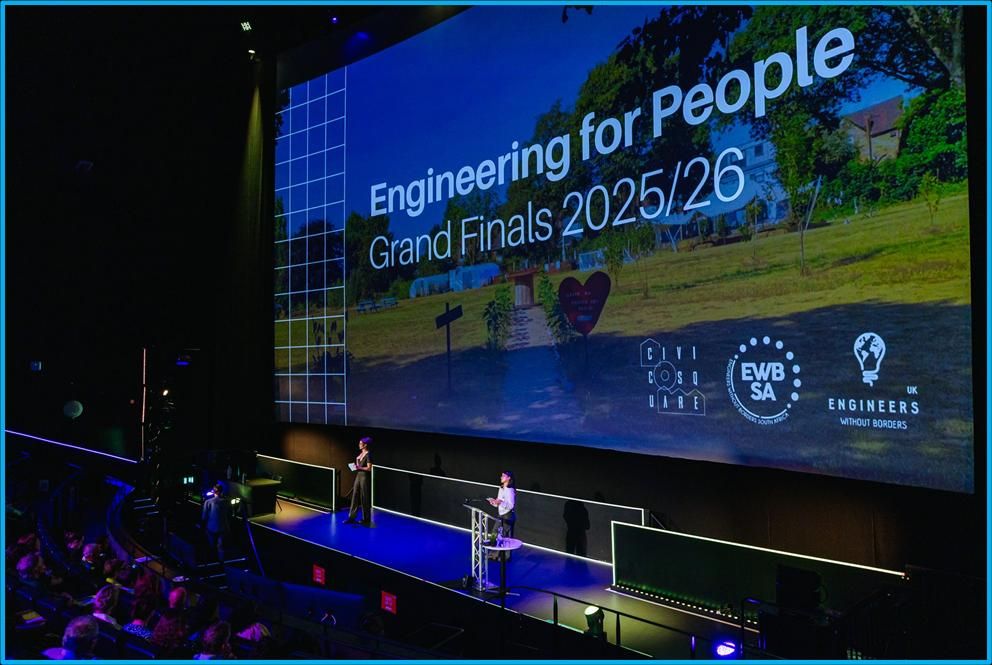
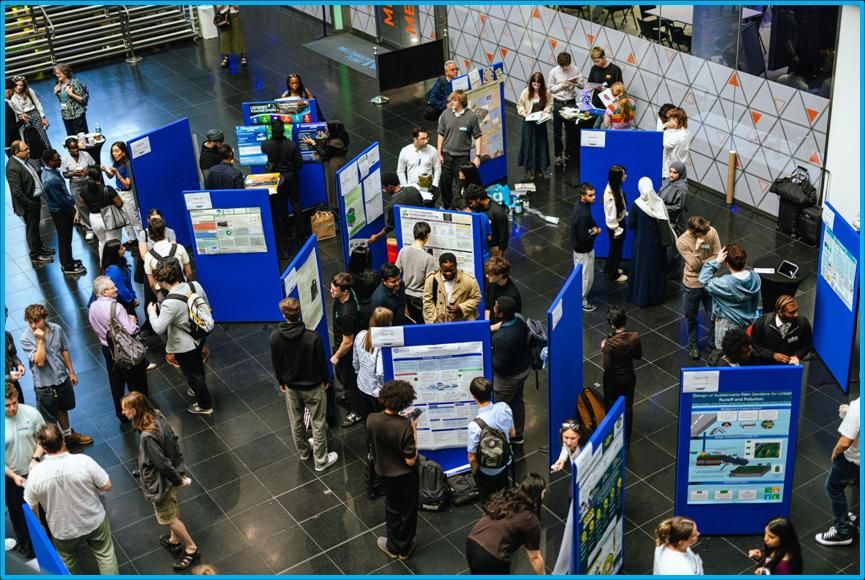
The visit also included inspiring examples of impact in action, from CIVIC SQUARE’s neighbourhood-led transformation work to the EWB-UK Engineering for People Design Challenge Grand Finals, where students showcased innovative solutions to real-world challenges.
A sincere thank you to the EWB-I delivery team—especially Katie Cresswell-Maynard—for the excellent facilitation, to our fellow EWB-I Board members for their valuable contributions, and to EWB-UK for being such generous hosts and for inspiring the next generation of engineers.
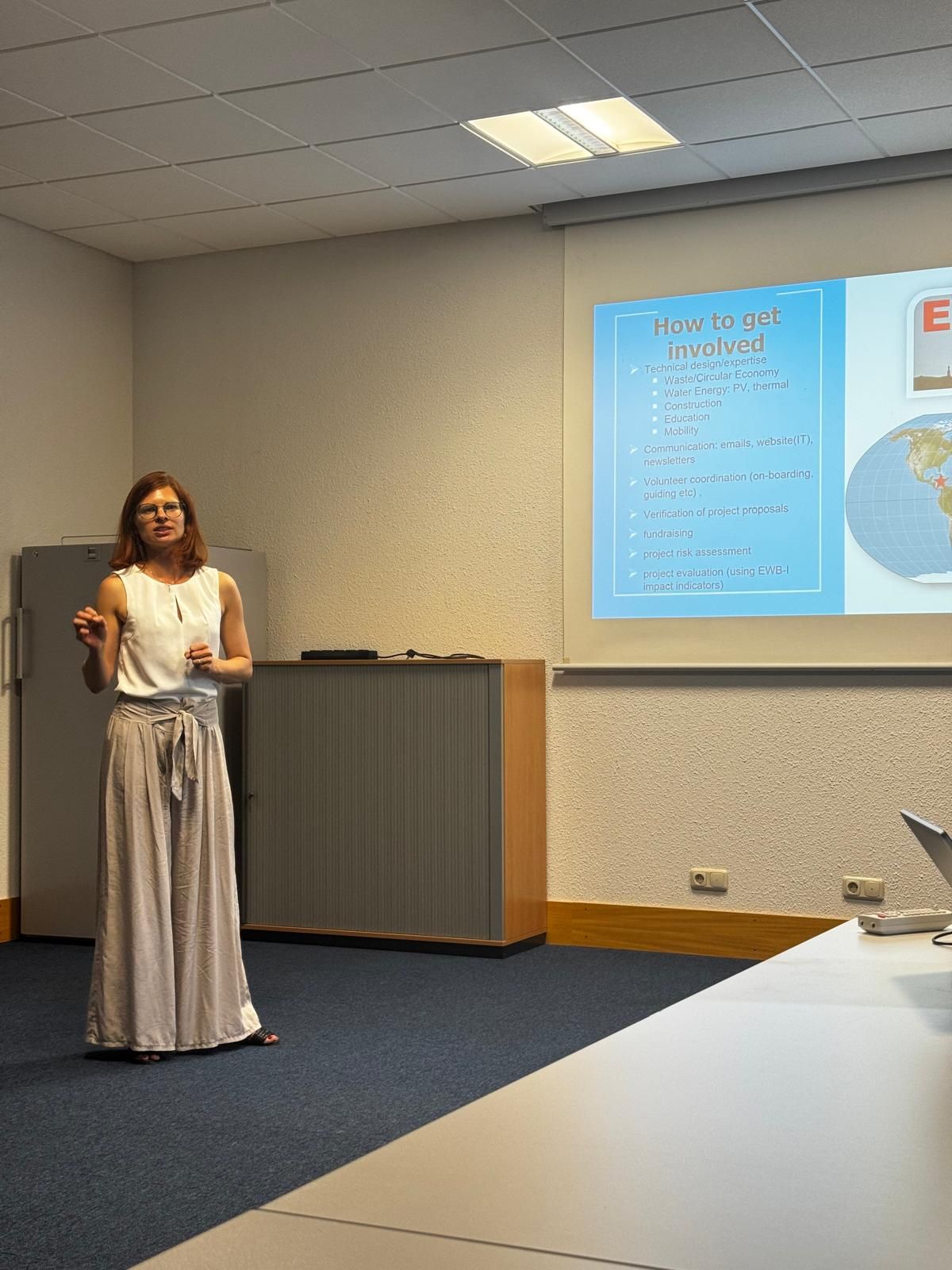
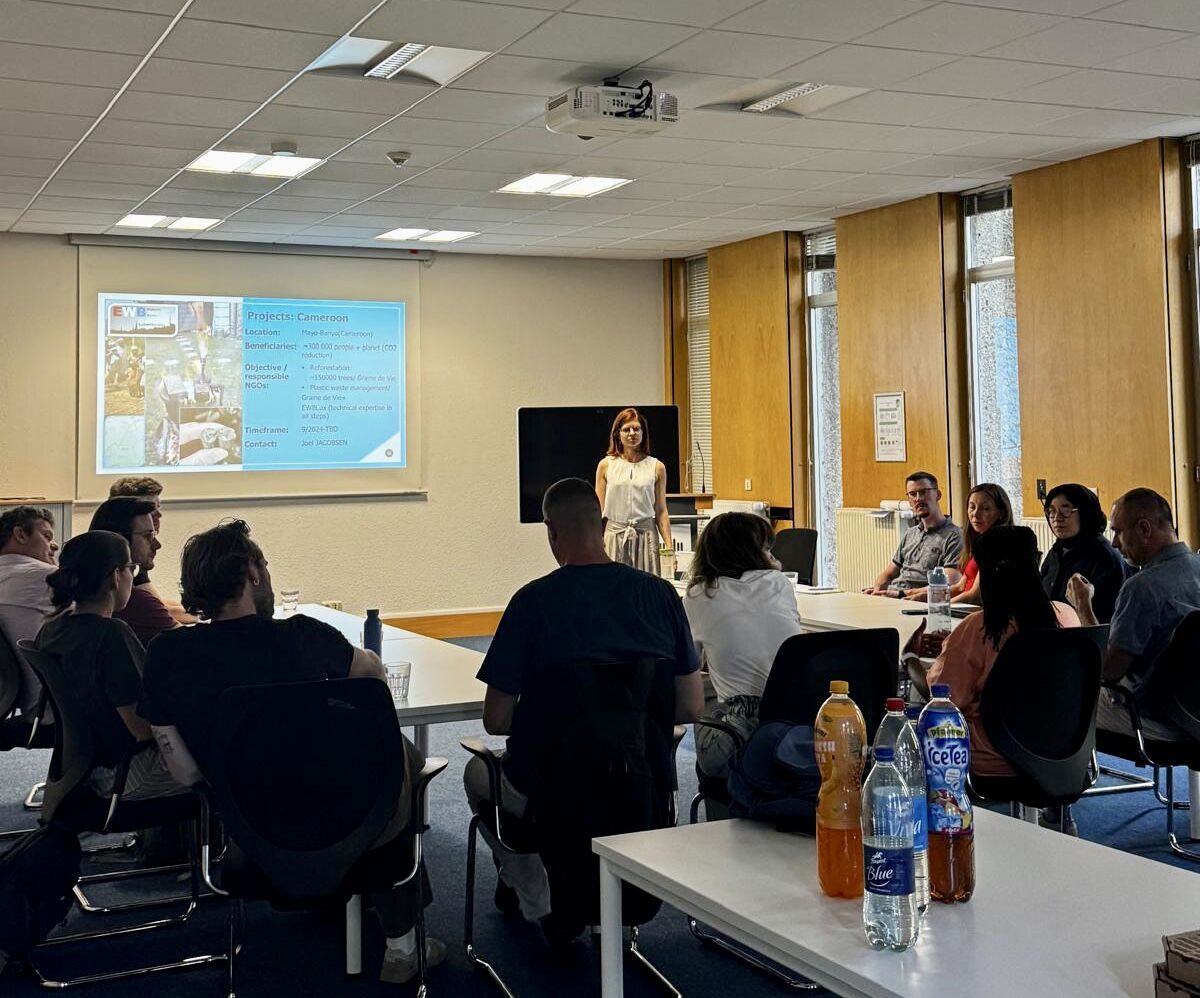
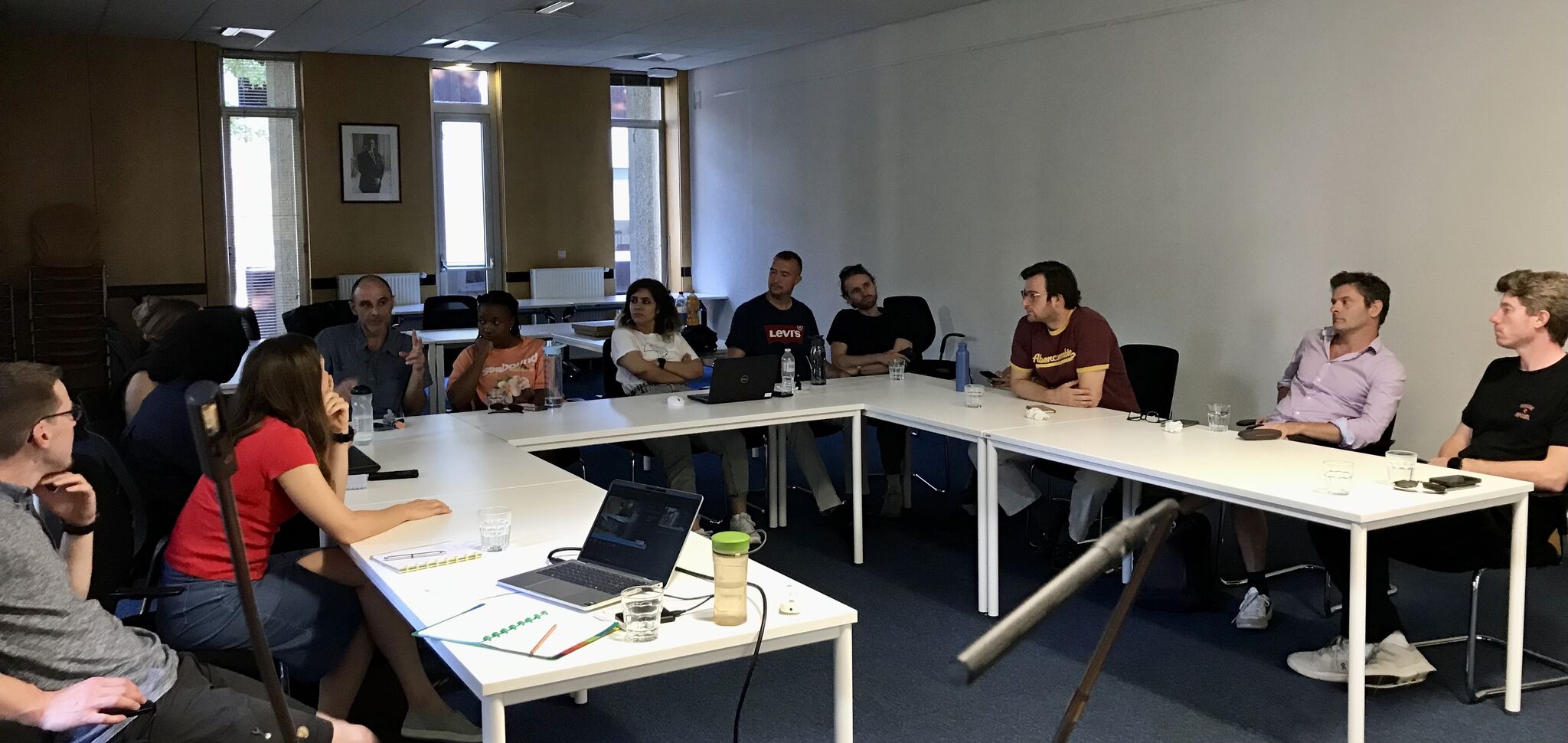
We recently gathered at Campus Kirchberg — old faces, new joiners, and a lot of pizza to reflect on the past six months, share updates on our projects, and discuss the next steps ahead.
🔧 We explored progress across initiatives including: • Solar PV systems in Uganda • Circular economy and plastic waste management in Cameroon • Biochar production research • Sustainable construction with earth-based materials in Morocco
A big thank you to everyone who joined, shared ideas, and contributed to our growing community of engineers, students, researchers, and sustainability enthusiasts.
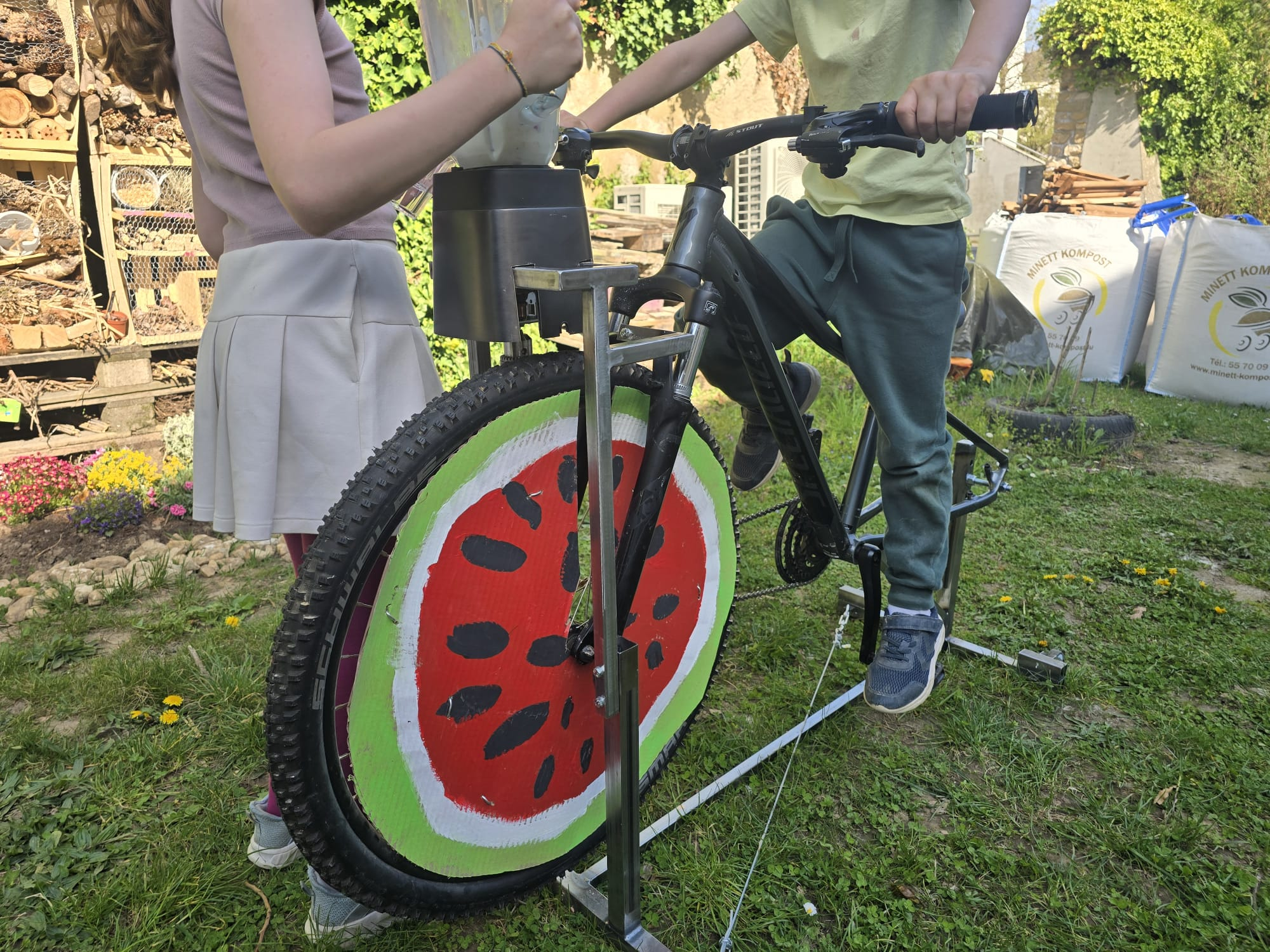
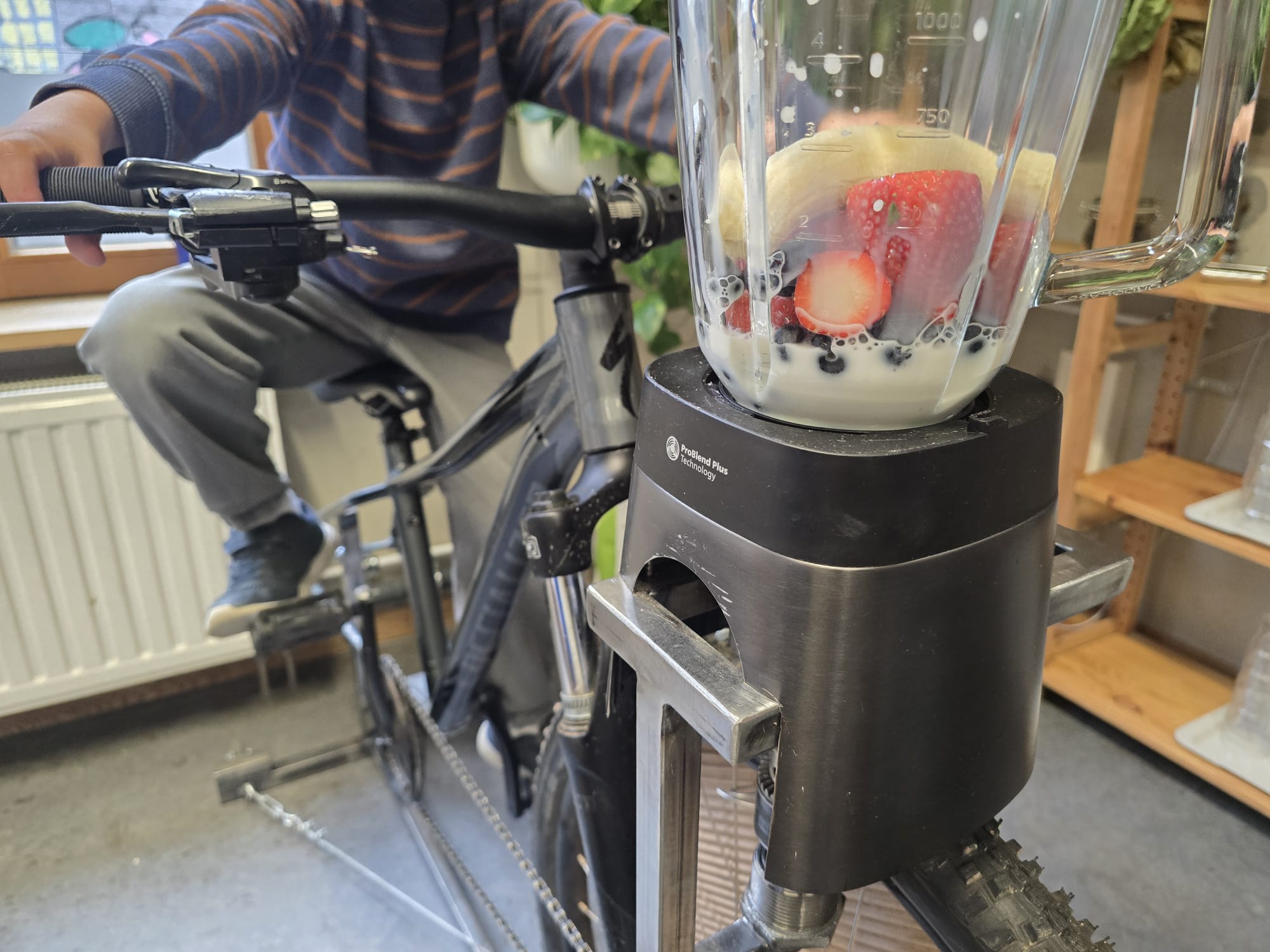
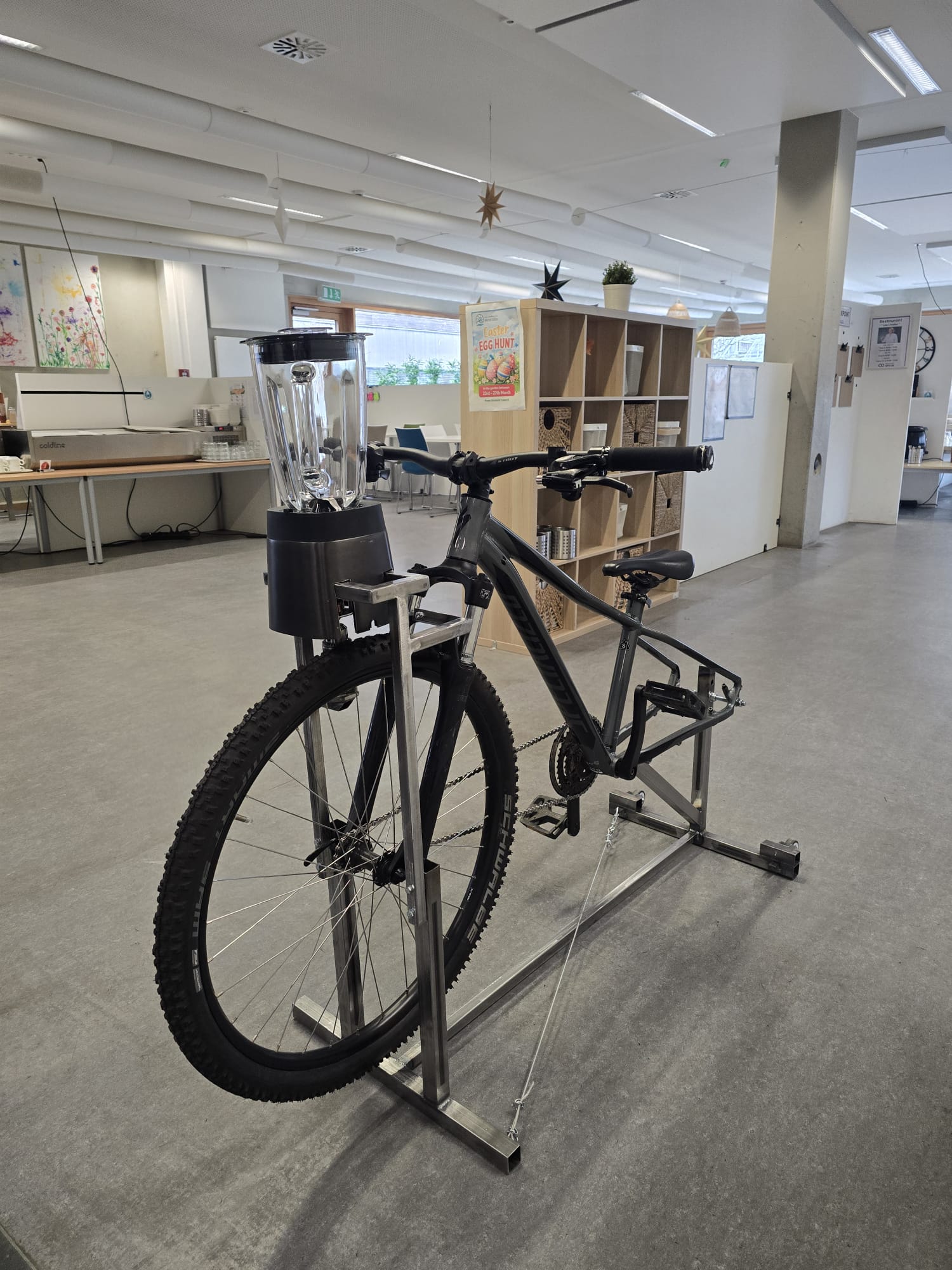
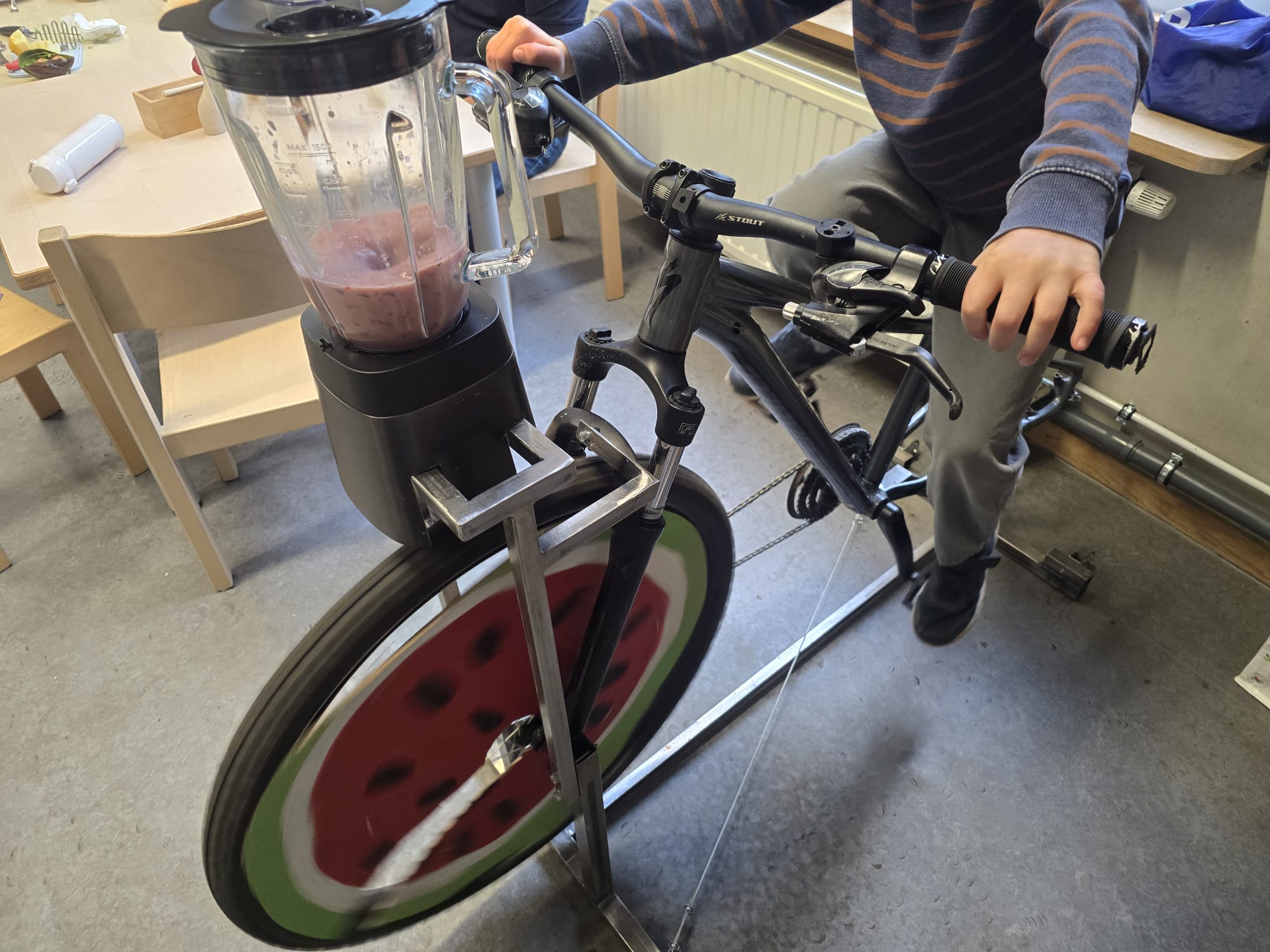
Over the past weeks, Engineers without borders Luxembourg has started bringing the SmoothieBike initiative to life together with the children at Day Care Arcus as part of the national BNE – “Bildung fir Nohalteg Entwécklung” programme.
What began as a broken bicycle is gradually transforming into something much bigger: ✨ a hands-on lesson in sustainability, ✨ a creative engineering experience, ✨ and a fun way to explore circular economy in everyday life.
Through the workshops, children are discovering how technical thinking, teamwork, and creativity can give new life to unused materials. Step by step, they are learning that sustainability is not just a concept in a classroom, but something tangible they can build with their own hands.
And soon… the real reward: Pedal-powered smoothies made by the children themselves! 🍓⚡
Beyond the smoothies, the project encourages discussions around: 🌍 Reducing waste 🔄 Reusing materials 💡 Energy and innovation 💚 Healthy and active lifestyles
Seeing the children’s curiosity and enthusiasm reminds us why projects like this matter: small engineering ideas can plant the seeds for lifelong environmental awareness.
A huge thank you to everyone involved in making this initiative possible. More updates coming soon!
The Engineers Without Borders Luxembourg General Assembly 2026 is an open event for anyone interested in how engineering, research, and sustainability can create meaningful real-world impact.
This annual gathering is an opportunity to: – Review key highlights and achievements from EWB Luxembourg’s work in 2025 – Discover our priorities, projects, and ambitions for 2026 – Learn more about our activities across water, energy, waste management, and sustainability – Explore ways to get involved through volunteering, collaboration, and student engagement
Whether you are a student, engineer, researcher, or sustainability-minded professional, this event is a great way to connect with like-minded people, exchange ideas, and learn how your skills can contribute to positive change.
📍 Location: D07 Campus Kirchberg (6 Rue Richard Coudenhove-Kalergi, Lëtzebuerg, Luxembourg, LU, 1359) 🗓 Date & time: 5 February 2026, 6:00 PM 🌍 Format: In-person, with online participation where possible
Everyone is welcome — no prior involvement with Engineers Without Borders is required.
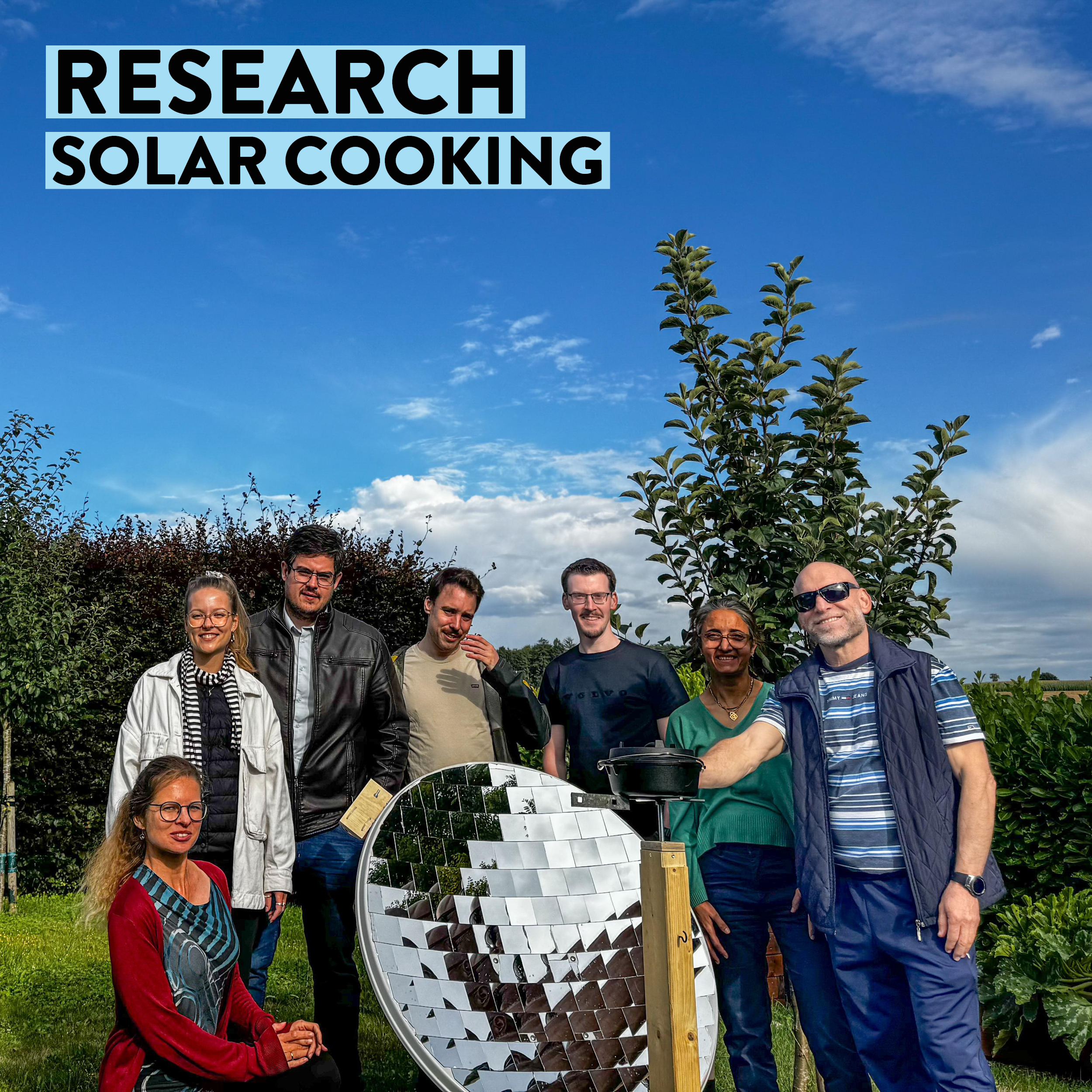
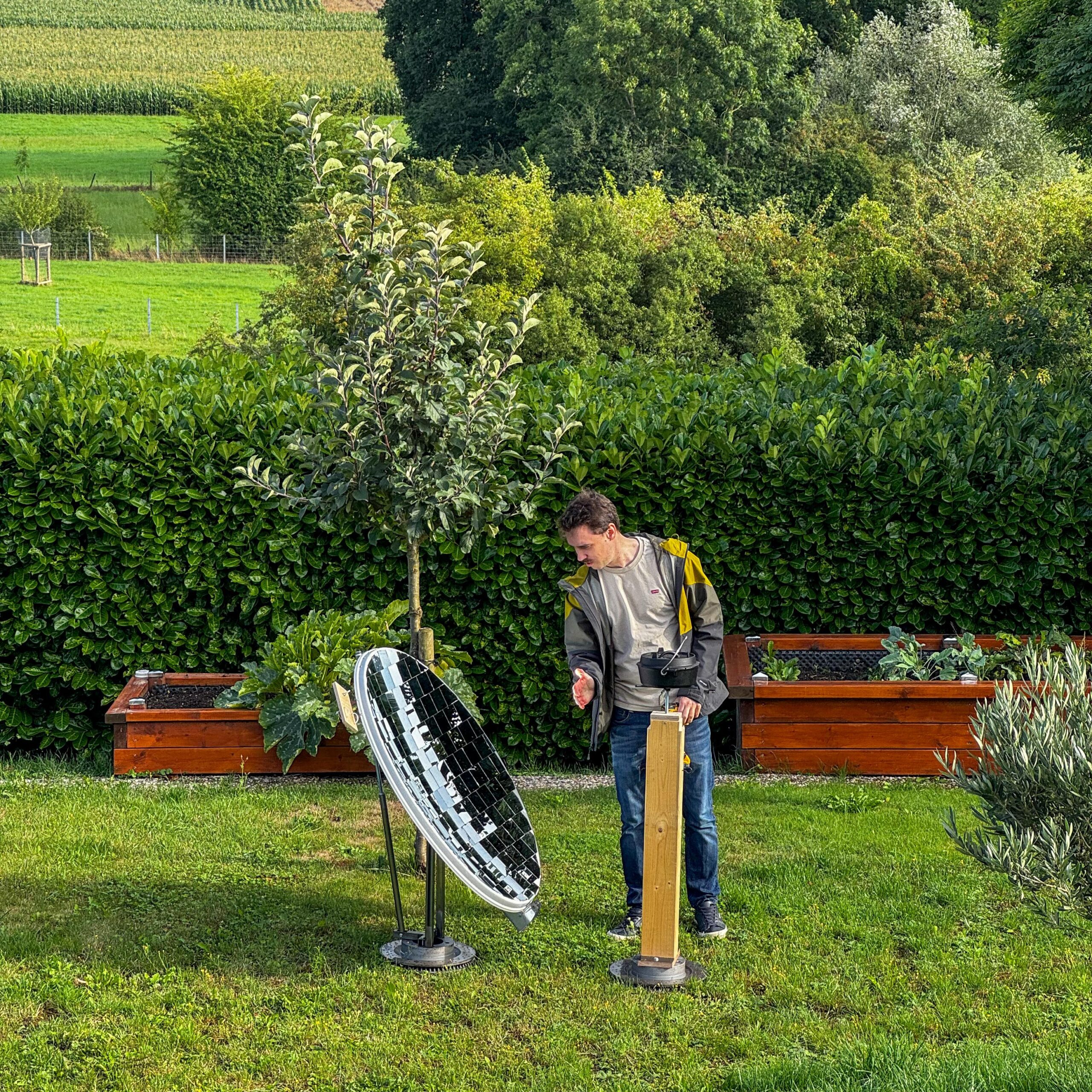
Last Sunday, we came together once again to see our solar cooker in action, reflect on what we’ve learned so far, and brainstorm the next steps in our ongoing research project. It was a great mix of hands-on testing, technical discussions – and shared moments.
Despite the sometimes unpredictable August weather in Luxembourg (we got lucky with the sun ☀️😅), we managed to cook a meal, enjoy the results, and exchange ideas on how to optimize performance, tracking mechanisms, and heat transfer.
🍽️ Key takeaway?
Engineering and sustainability go hand-in-hand – but it’s the human element that makes these projects truly meaningful. Sitting together, sharing a solar-cooked dish, and dreaming up improvements is what drives us forward.
🔬 What’s next?
> Testing alternative absorber Materials > Improving reflector precision > Collecting more performance data under varying conditions
Huge thanks to everyone who joined and contributed their insights & energy – especially Michel Guenther for pushing things forward!
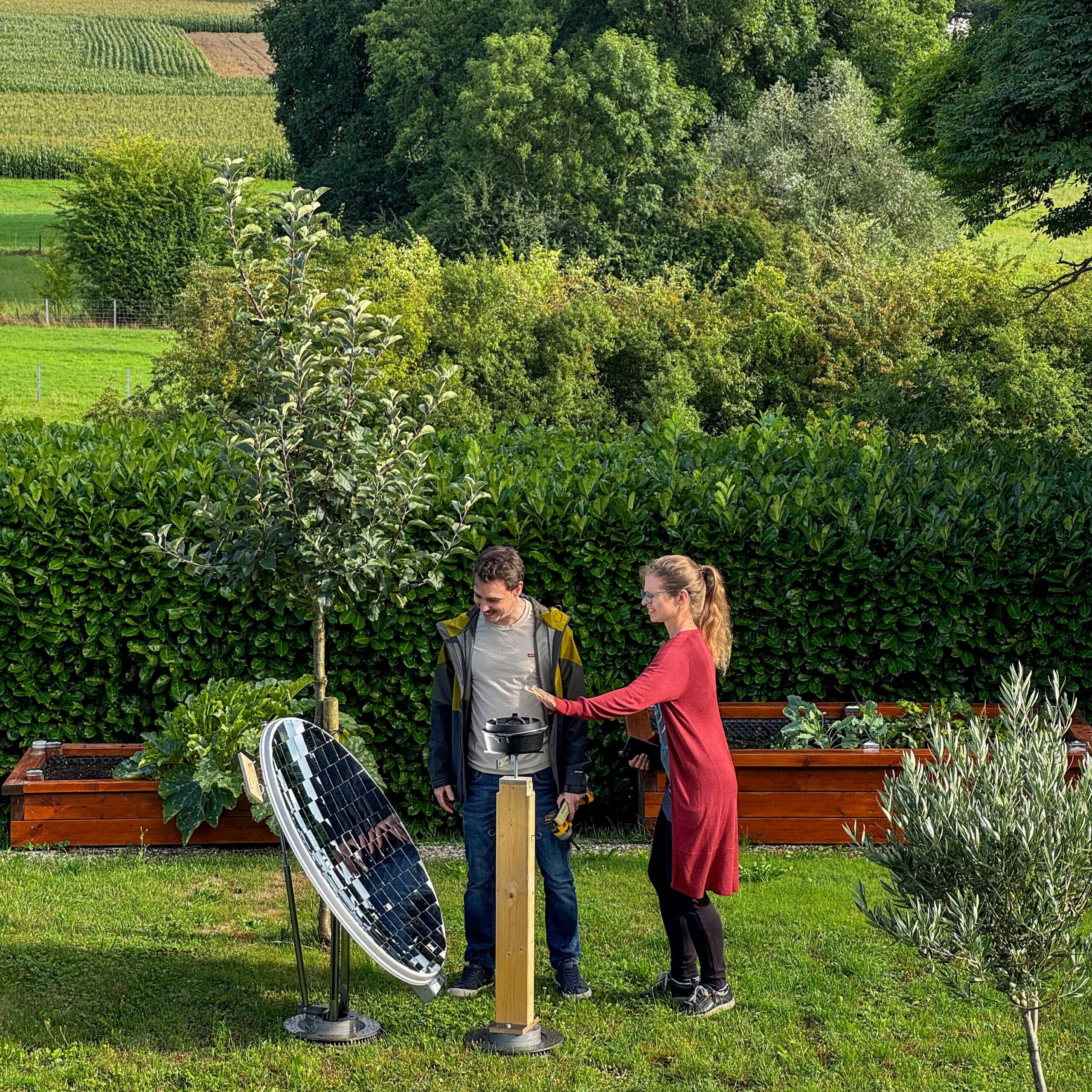
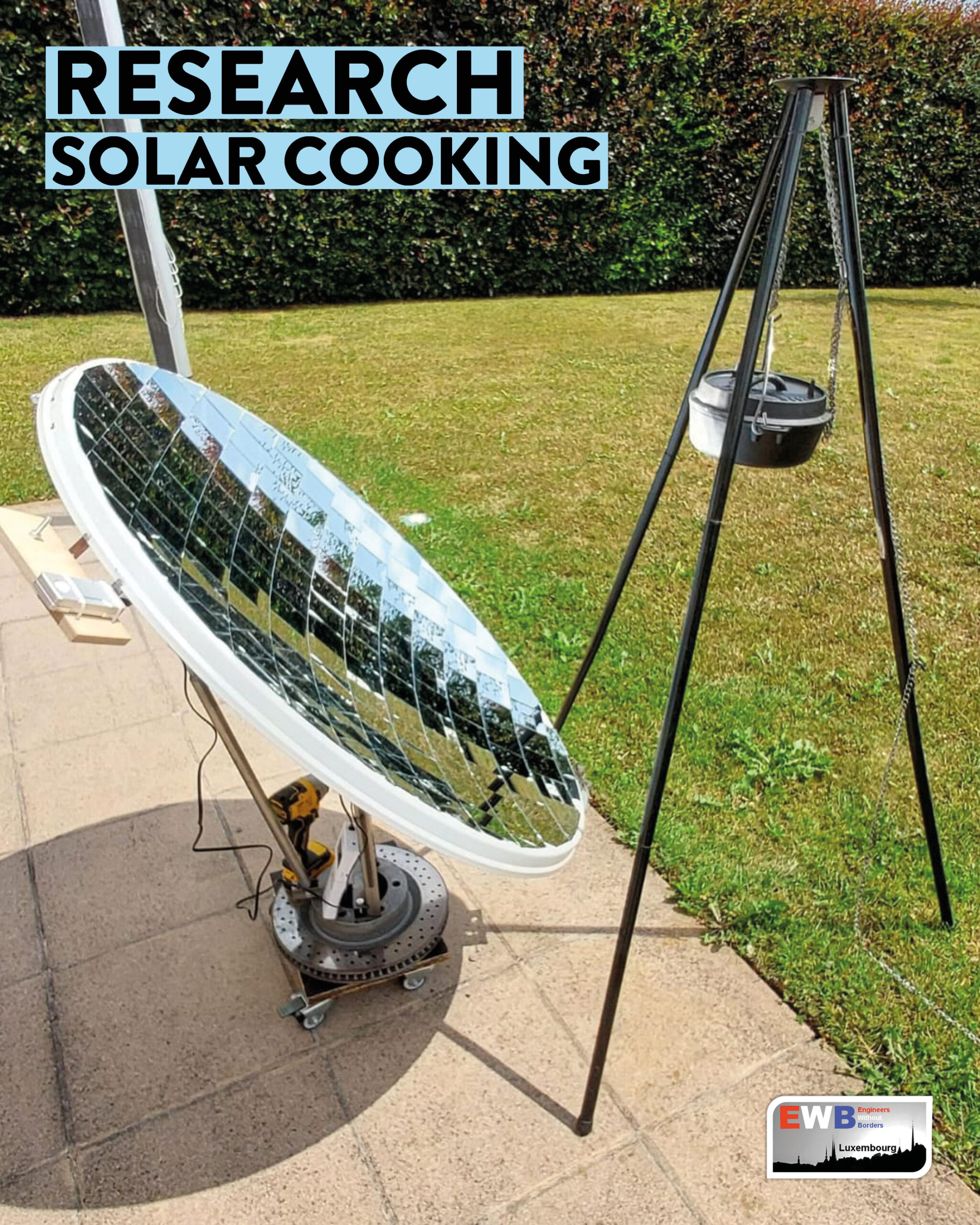
We decided to build a solar cooker as a fun and educational science project. A solar cooker uses nothing but sunlight to prepare food – no fossil fuels, no wood. 🌱♻️ A small step for us, a meaningful contribution to a more sustainable future.
🎯 Goal: To create a simple, low-cost solar cooker using common materials, test the concept, and gain hands-on experience with solar cooking.
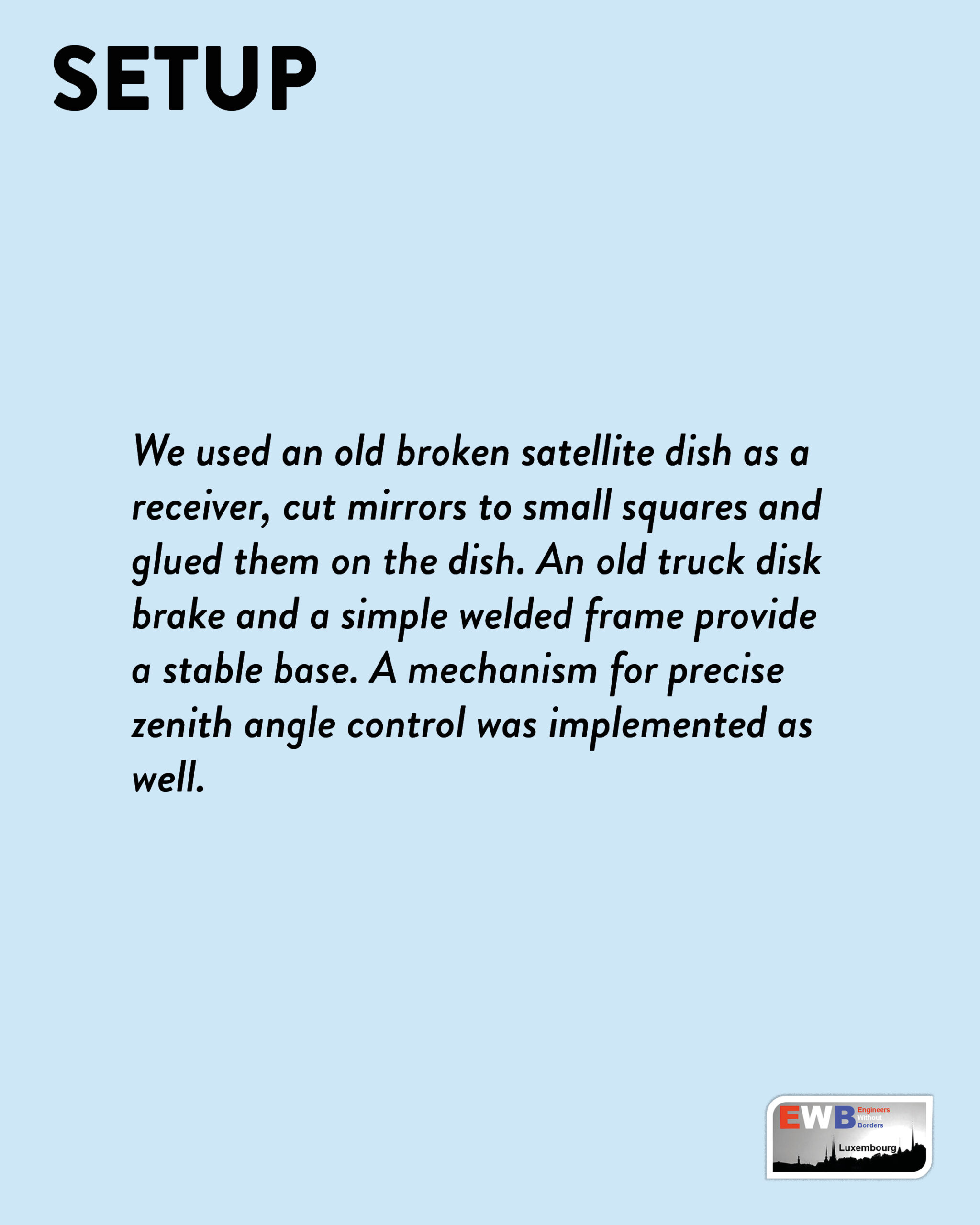
🛠️ Our Approach: 📡 Reused a broken satellite dish as the reflector 🪞 Cut small mirror squares and glued them onto the dish 🛞 Used an old truck brake disc + welded steel frame for a stable base ⚙️ Implemented a zenith angle control mechanism for solar tracking
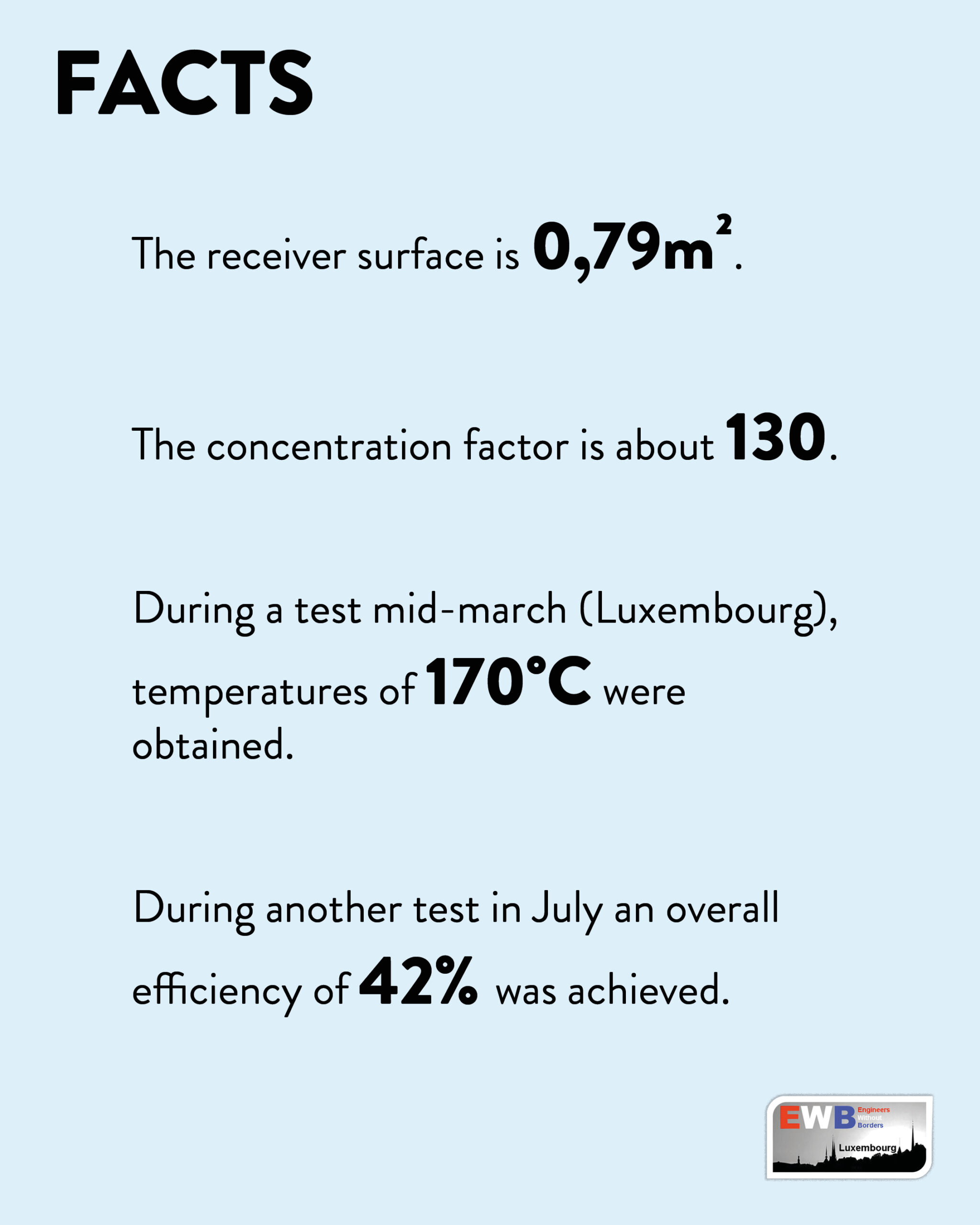
📊 Key Data: 🔲 Reflective surface: 0.79 m² 🔍 Concentration factor: ~130 🌡️ Test in March (Luxembourg): 170 °C reached ☀️ Test in July: 42 % efficiency achieved
💬 Conclusion: A rewarding hands-on project that combines engineering, sustainability, and reuse. A great example of how simple ideas can drive real impact.
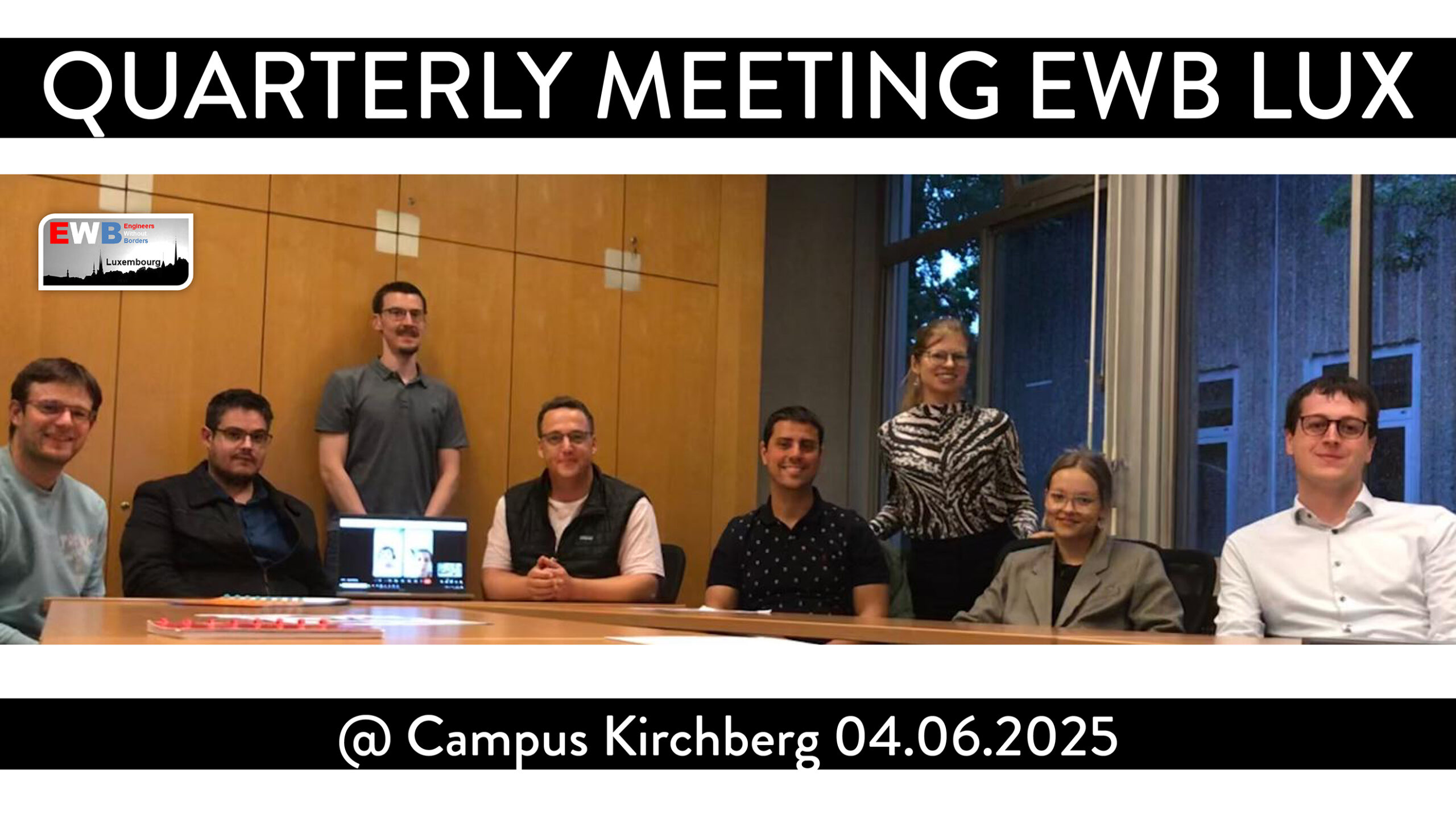
On June 4th, 2025, we gathered for our quarterly meeting at the university — a great opportunity to connect, share ideas, and reflect on recent progress.
One of the highlights was the presentation of our recently completed project in Kenya – we’re proud to have successfully delivered a water access solution for St. Joseph’s Girls Secondary School, a boarding school in rural Kenya. 🌍💧
We also shared updates on ongoing initiatives and projects, including: – Renewable Energy in Zambia ⚡ – Circular Economy efforts in Cameroon ♻️ – And a short report on our internal plastic recycling workshop.
It was fantastic to see both new and familiar faces — thank you to everyone who joined and contributed to the inspiring conversations.
Together with fellow chapters around the world, we are committed to building a more sustainable, equitable, and connected future. Being part of this global movement empowers us to share knowledge, strengthen impact, and stand in solidarity with communities worldwide. Here’s to collaboration without borders! 🎉✨